Ellis Keller · 6 September 2026
Integrating Custom Validation Rules in Dynamic Form Systems for Better Data Integrity
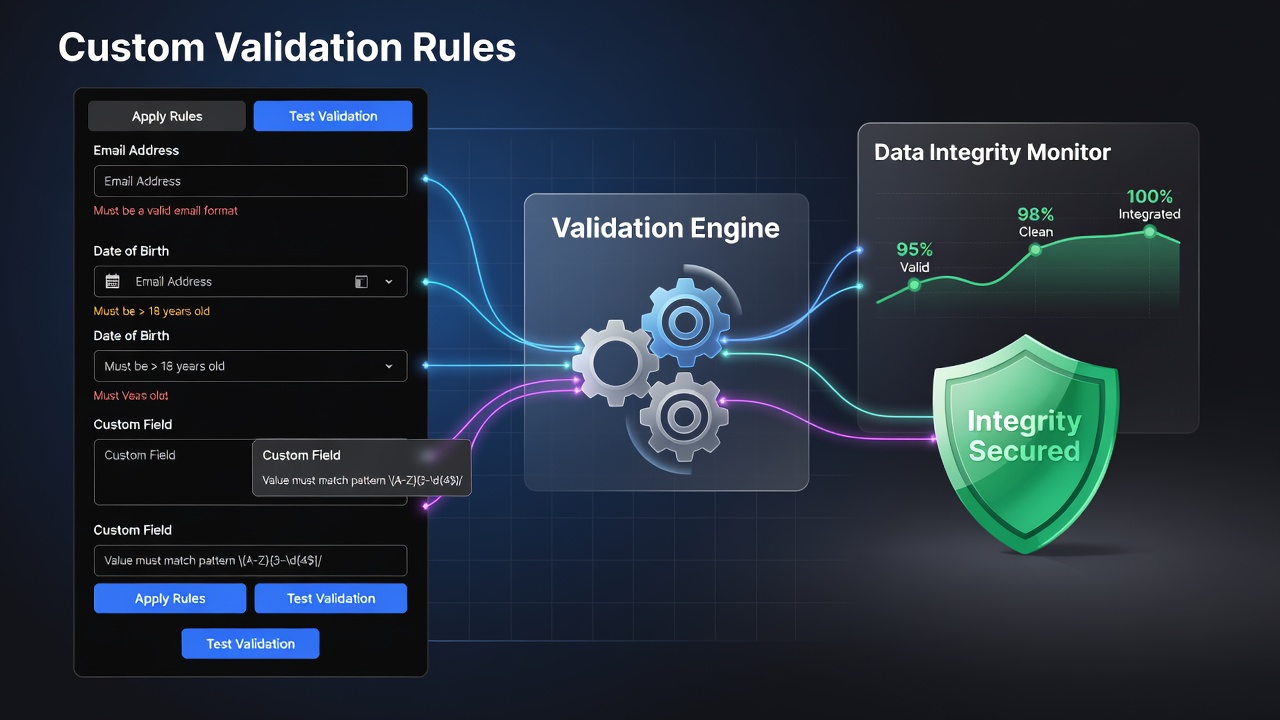
Dynamic form systems power data collection across industries where fields adapt in real time based on user selections and previous entries, while custom validation rules enforce specific checks that go beyond standard formats to catch inconsistencies before submission occurs. These rules often combine regular expressions with business logic functions that reference external datasets or conditional dependencies, and they operate at both client and server layers to create layered protection against malformed or conflicting information.
Core Components of Dynamic Form Architectures
Developers build dynamic forms using JavaScript frameworks that listen for input events and trigger rule evaluations on the fly, yet the same logic gets replicated on backend services to prevent bypass attempts through direct API calls. Researchers at academic institutions have documented how rule engines store validation criteria in separate configuration files, which allows teams to update requirements without redeploying entire applications, and this separation supports rapid compliance adjustments when regulations shift.
Custom rules typically address domain-specific constraints such as cross-field calculations in financial applications or range checks tied to geographic data in logistics platforms. One study revealed that organizations implementing these layered checks reduced downstream data cleaning efforts by measurable percentages, because errors surface at the point of entry rather than during later processing stages.
Implementation Patterns for Custom Rules
Teams integrate custom validation through modular rule libraries that accept parameters like field names, operator types, and reference values, while asynchronous calls to microservices handle complex lookups against master data repositories. According to guidelines published by the National Institute of Standards and Technology, consistent application of such rules supports data quality metrics across federal systems, and similar approaches appear in private sector deployments where audit trails record every validation outcome.
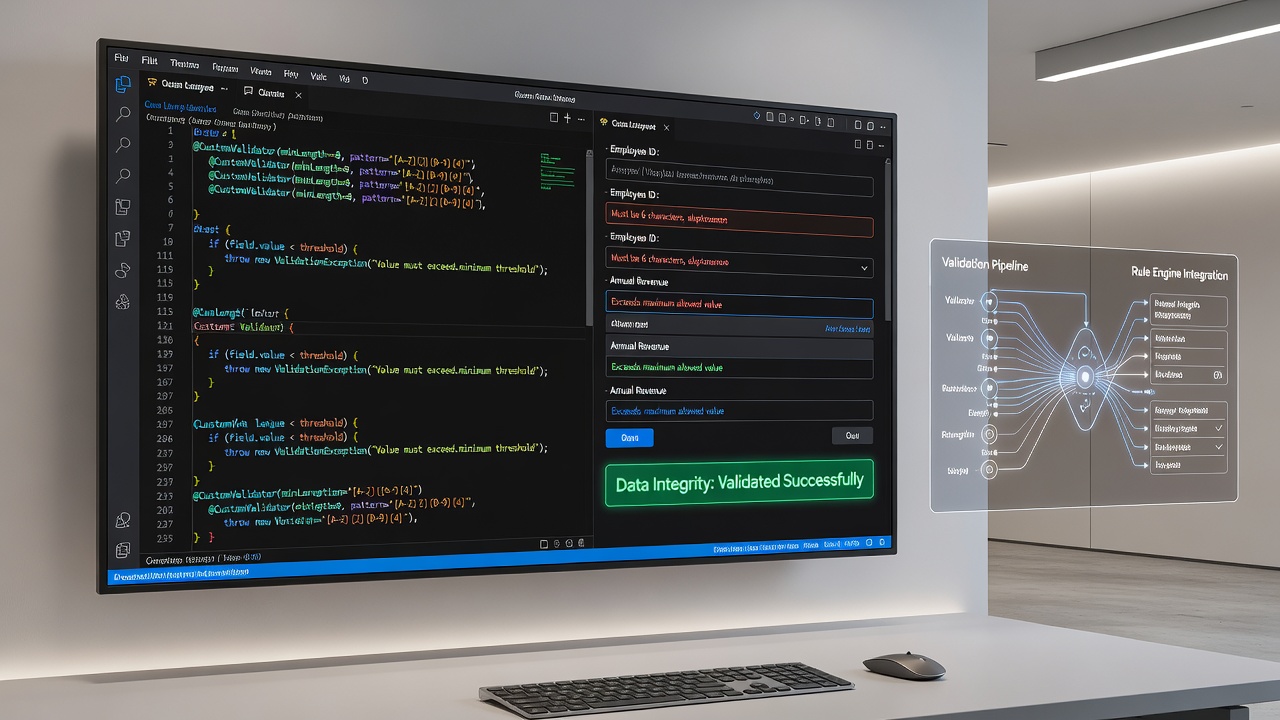
Configuration often occurs via JSON schemas that define rule sets, including severity levels that determine whether an entry blocks submission or merely warns the user. Engineers frequently test these configurations against synthetic datasets that simulate edge cases, such as leap year date handling or currency conversions during market volatility periods, and automated test suites verify that rules remain effective after schema updates.
Impact on Data Integrity Across Sectors
Data integrity improves when custom rules enforce referential integrity between related records, for instance ensuring that inventory quantities align with warehouse location codes before orders finalize. Government agencies in Canada have reported lower rates of data reconciliation issues after deploying similar validation layers in citizen service portals, while European research consortia have measured corresponding gains in dataset reliability for longitudinal studies.
Systems that combine client-side feedback with server-side enforcement create a feedback loop where users correct entries immediately, yet the backend still applies final checks that incorporate the latest business rules. Observers note that this dual approach reduces the volume of support tickets related to data quality, because problems get resolved at the source rather than through manual follow-up processes.
Maintenance and Evolution of Rule Sets
Rule maintenance involves version control for validation logic so that historical submissions remain interpretable even after criteria change, and audit logs capture which rules applied to each record at the time of entry. Organizations schedule periodic reviews where domain experts examine rule performance against actual data distributions, then refine thresholds or add new conditions based on emerging patterns. This iterative process keeps validation aligned with operational realities without introducing unnecessary friction for end users.
Integration with monitoring dashboards allows teams to track rejection rates per rule, which highlights areas where form design might need adjustment or where user training could reduce common mistakes. Those who've studied large-scale deployments find that transparent rule documentation helps onboarding for new developers and supports compliance audits that require proof of consistent data handling practices.
Conclusion
Custom validation rules embedded in dynamic form systems deliver measurable improvements to data integrity by catching inconsistencies at entry and maintaining consistency across evolving datasets. Organizations that adopt modular, testable rule engines position themselves to adapt quickly when requirements change, while preserving the accuracy of historical records through careful versioning and logging. Continued refinement of these techniques, supported by standards from bodies like NIST and international research efforts, sustains reliable data pipelines that serve both operational and analytical needs.