Clara Neumann · 4 October 2026
Examining Integration Patterns Between Form Builders and Workflow Engines for Automated Approvals
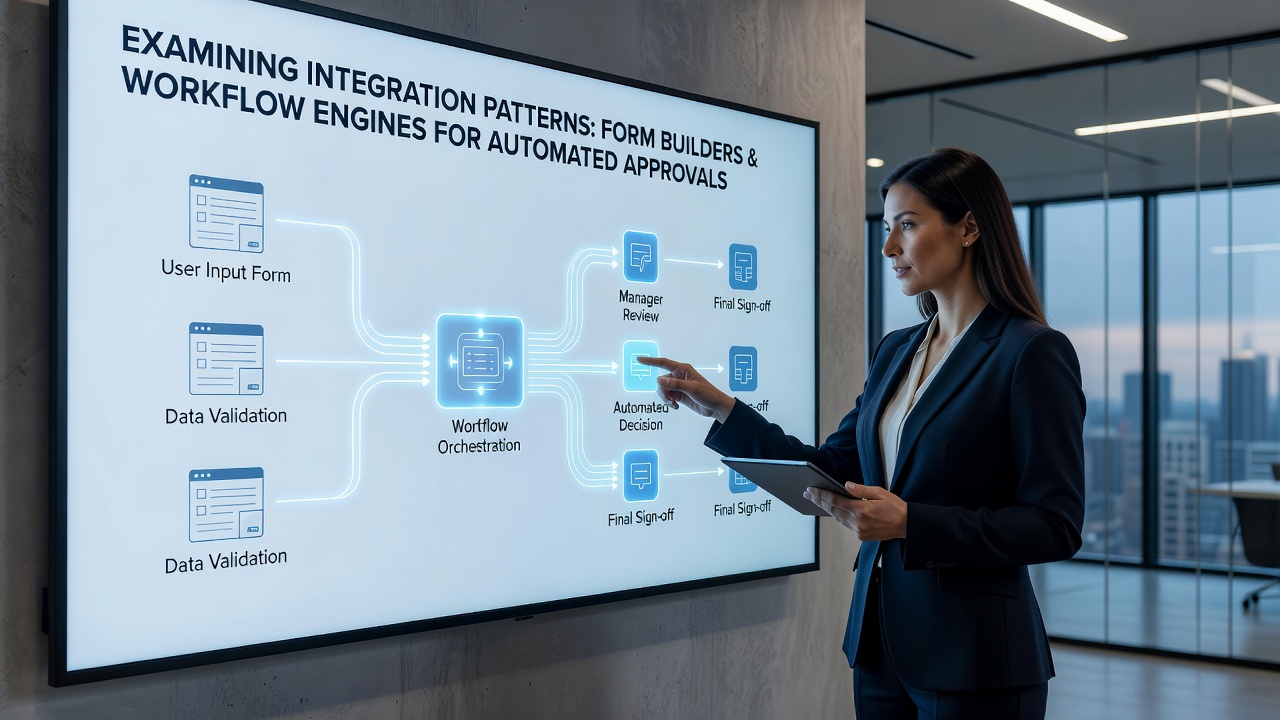
Form builders capture structured data while workflow engines manage sequential tasks and decision points, and their integration creates pathways for automated approvals that reduce manual handoffs across departments. Researchers have documented several patterns that organizations deploy to connect these systems, ranging from direct API endpoints to event-driven architectures that trigger actions based on form submissions. Data from enterprise surveys indicates that companies implementing these connections see measurable decreases in approval cycle times, particularly when forms feed directly into rule-based routing within the workflow layer.
Core Patterns in System Connections
One established approach relies on synchronous API calls where a form builder posts submission data to the workflow engine in real time, allowing immediate evaluation against predefined approval criteria. This method suits scenarios requiring instant feedback, such as expense reimbursements that need manager sign-off within minutes of submission. Observers note that middleware platforms often sit between the two systems to handle data transformation, mapping form fields to workflow variables without custom coding on either side. Another pattern uses webhooks that push notifications from the form builder to the workflow engine upon completion, decoupling the systems so each can scale independently while maintaining process continuity.
Event sourcing represents a third pattern where changes in form state publish to a message broker, and the workflow engine subscribes to relevant topics to initiate approvals. Studies from academic institutions show this approach improves auditability because every state transition leaves a traceable record, which proves useful during compliance reviews. Those who have implemented it report that combining this with conditional logic inside the workflow engine allows dynamic routing based on form values like department codes or amount thresholds. The reality is that hybrid patterns often emerge in practice, blending API calls for critical paths with messaging for less time-sensitive branches.
Implementation Considerations Across Environments
Security requirements shape how these integrations operate, since form data frequently contains sensitive information that must traverse authentication layers before reaching the workflow engine. Token-based access controls and encrypted payloads appear in documented deployments, with many teams adopting OAuth flows to manage permissions between platforms. Scalability becomes relevant when submission volumes spike, and researchers have observed that asynchronous patterns handle peak loads more gracefully than blocking API calls. Configuration management tools help maintain consistency across development, staging, and production environments so that approval rules tested in one place behave identically when promoted.
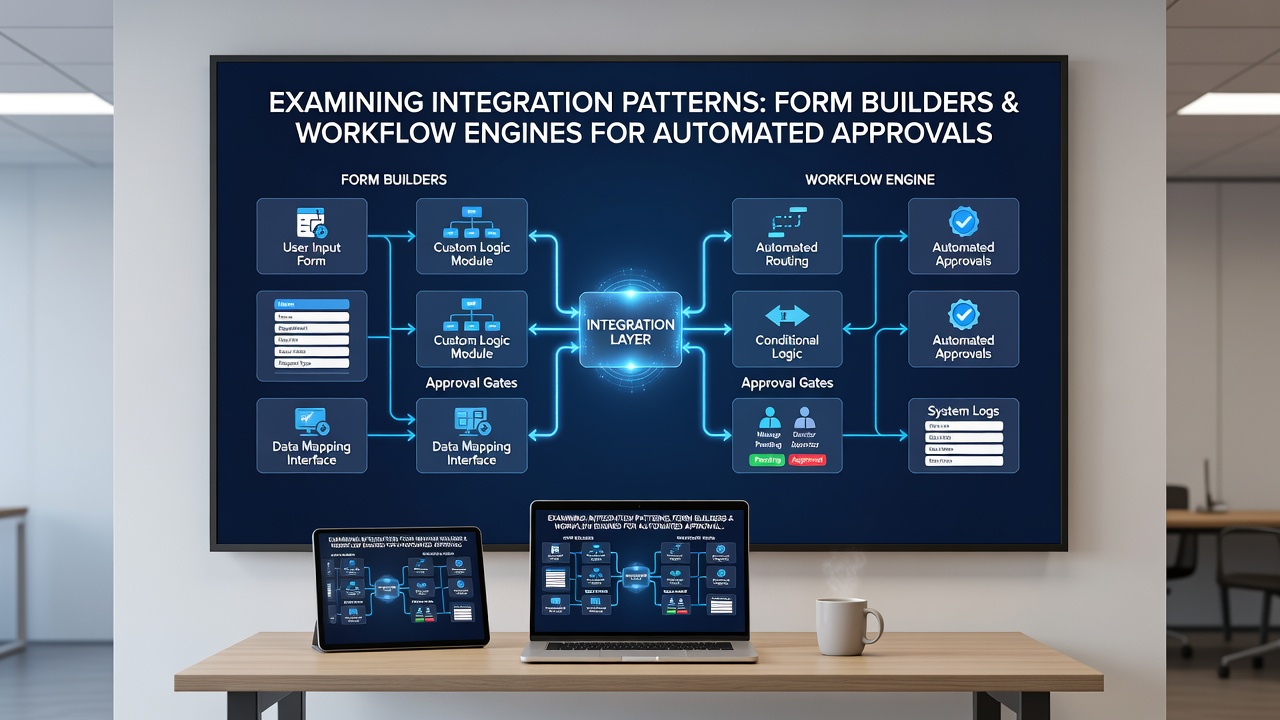
Data mapping remains a persistent task because form builders and workflow engines rarely share identical schemas. Transformation scripts or low-code mapping interfaces convert incoming fields into structures the workflow engine understands, and version control of these mappings prevents drift when either system receives updates. One case where experts tracked integration metrics revealed that organizations investing in reusable mapping libraries reduced subsequent project timelines by measurable margins. Monitoring tools track success rates of submissions moving into workflows, surfacing bottlenecks such as rejected payloads or stalled approvals that require intervention.
Developments Expected by October 2026
Industry reports project continued growth in low-code connectors that abstract integration details, allowing teams to configure approval flows without deep programming knowledge. Standards bodies continue refining specifications for form and workflow interoperability, which should ease cross-vendor implementations. According to analyses from the OECD digital government initiatives, governments in multiple regions are piloting unified platforms that combine form collection with workflow orchestration for citizen services. A separate study released by Canadian research networks highlights similar patterns in provincial health and permitting systems where automated approvals now handle routine cases without human review.
Advances in orchestration layers promise tighter coupling between form validation and workflow decision points, reducing the need for duplicate logic in both systems. Those monitoring adoption trends expect increased use of containerized deployment models that package integration components for consistent rollout across cloud providers. Figures from technology adoption surveys suggest that by October 2026, a larger share of mid-sized enterprises will have shifted from custom scripts to managed connectors for their approval processes.
Conclusion
Integration patterns between form builders and workflow engines continue evolving as organizations seek reliable automated approvals that maintain data integrity and audit trails. The documented approaches, from API-driven connections to event-based messaging, each address different operational priorities while sharing the goal of minimizing manual steps. Evidence from deployed systems shows that careful attention to mapping, security, and monitoring supports stable performance over time, and upcoming standards may further simplify these connections across diverse technology stacks.