Iris Long · 20 September 2026
Decoding Conditional Branching Patterns in Scalable Form Platforms for Enterprise Data Routing
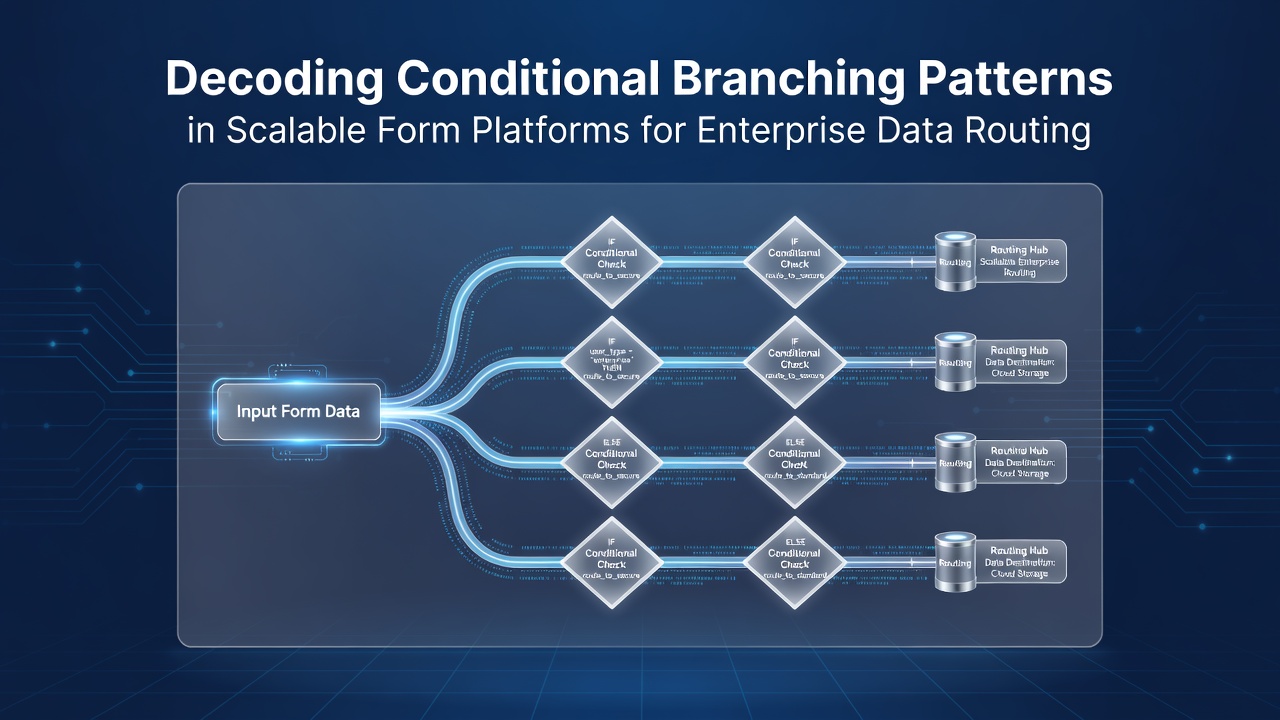
Conditional branching patterns form the core logic layer in many scalable form platforms that handle enterprise data routing, and these systems rely on rule-based decision trees to direct information along specific paths based on user inputs or predefined criteria. Researchers at institutions across North America and Europe have documented how such patterns operate by evaluating conditions in sequence or parallel, then routing records to appropriate databases, workflows, or external services without manual intervention.
Core Mechanics of Conditional Branching
Enterprise platforms implement branching through structured if-then-else statements embedded directly in form schemas, and these statements trigger actions such as field visibility changes, data validation steps, or full record redirection to different processing queues. Data from teh Australian Bureau of Statistics shows that organizations managing high-volume submissions often configure branching to reduce processing latency by up to 40 percent when routing occurs at the point of entry rather than after storage. Observers note that the patterns scale best when rules remain modular, allowing administrators to add new conditions without rewriting entire forms.
Platforms achieve scalability by compiling branching logic into efficient query trees that execute against cached rule sets, while distributed architectures spread evaluation across multiple nodes during peak loads. Studies conducted by Canadian research teams indicate that latency spikes drop significantly when platforms separate rule evaluation from data persistence layers, and this separation proves especially useful for multinational enterprises handling regional compliance variations.
Integration with Enterprise Data Routing Systems
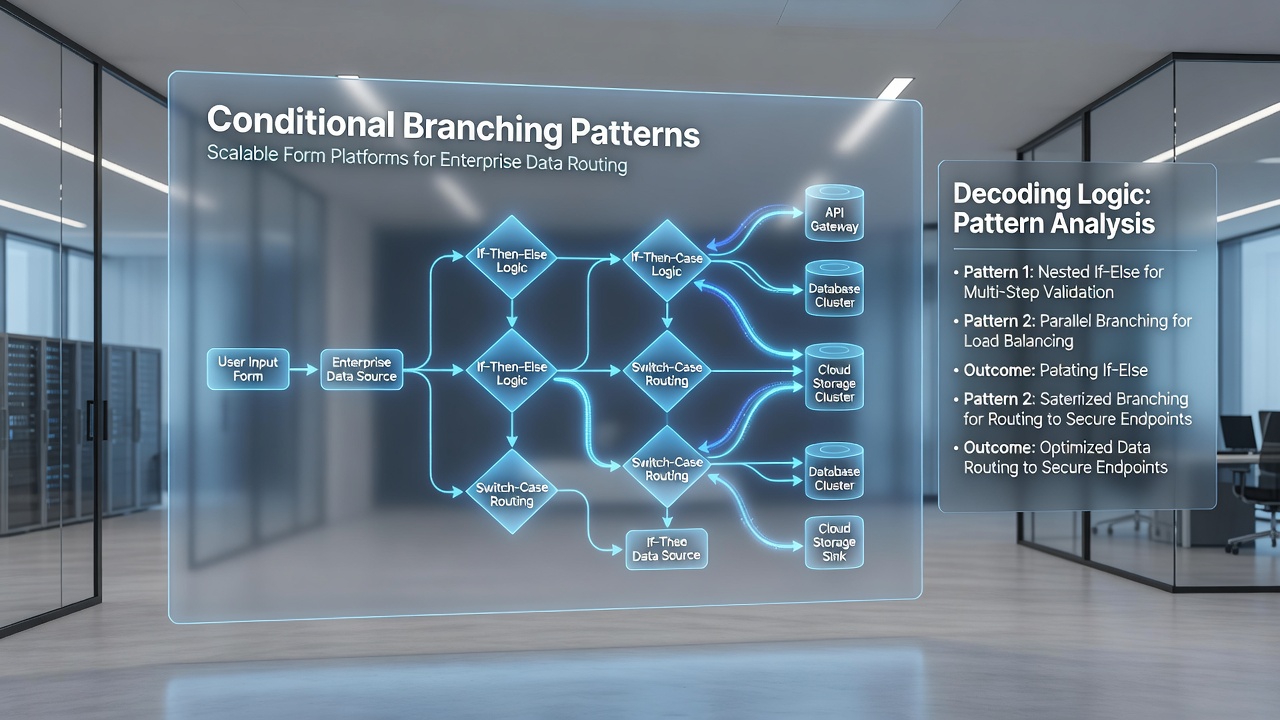
Routing decisions extend beyond simple visibility toggles to include API calls, message queue assignments, and cross-system synchronization tasks, and conditional patterns determine whether a submitted record enters a CRM update stream, triggers an approval workflow, or routes to an archival repository. In September 2026, several platform vendors plan to release enhanced rule engines that support real-time evaluation against live enterprise data lakes, according to industry announcements.
Those who manage large deployments observe that branching patterns must account for edge cases such as conflicting rules or incomplete input sets, and robust platforms incorporate priority ordering plus fallback routes to maintain data integrity. A report from the European Union Agency for Cybersecurity highlights how properly implemented branching reduces exposure to routing errors that could otherwise lead to data misplacement across jurisdictions.
Performance Considerations in Large-Scale Environments
Scalable form platforms monitor branching execution through built-in telemetry that tracks rule hit rates, evaluation times, and downstream routing success metrics, and administrators use these figures to refine conditions over time. Research published by academic groups in Asia-Pacific regions demonstrates that platforms handling millions of monthly submissions maintain sub-second response times only when branching logic undergoes regular optimization passes that prune unused rules.
Enterprises frequently combine branching with metadata tagging so that routed records carry contextual flags for downstream analytics systems, and this tagging occurs automatically once the primary condition evaluates true. The approach supports compliance audits because every routing decision leaves a traceable log entry tied to the specific rule that fired.
Implementation Patterns Across Industries
Financial services organizations deploy branching to separate retail versus institutional submissions early in the intake process, whereas healthcare providers use similar logic to route patient data according to consent flags and jurisdictional requirements. Government agencies in multiple regions have adopted these platforms to streamline permit applications, with conditional paths directing forms to the correct review departments based on project type and location data.
One documented deployment at a logistics firm showed that conditional branching reduced manual triage steps by routing shipment exception reports directly to the relevant carrier systems, and similar results appear in manufacturing case studies where quality control forms trigger supplier notifications automatically. These examples illustrate how the same underlying pattern adapts across sectors when the rule definitions align with business processes.
Conclusion
Conditional branching patterns continue to evolve within scalable form platforms as enterprises demand more precise control over data routing outcomes, and ongoing developments in rule engines promise greater flexibility without sacrificing performance. Organizations that maintain clear documentation of their branching logic and conduct periodic reviews position themselves to handle increasing data volumes while preserving routing accuracy across complex environments.