Iris Long · 18 October 2026
Charting Persistence Layer Adaptations for Form Metadata in Cloud-Native Deployment Scenarios
Core Concepts Behind Form Metadata Storage
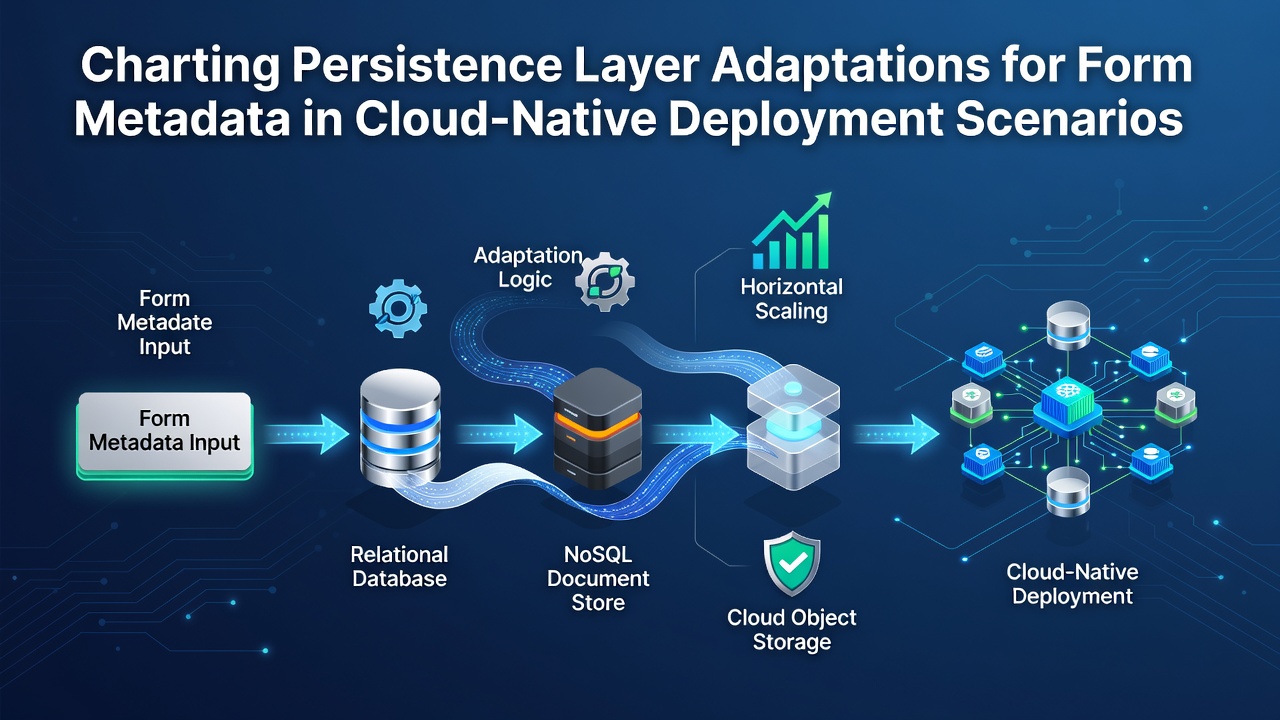
Form metadata encompasses structured details such as field definitions, validation schemas, conditional logic mappings, and version histories that drive dynamic data collection interfaces, and persistence layers in cloud-native setups must handle these elements across distributed nodes while maintaining consistency during scaling events. Researchers note that traditional relational databases often give way to hybrid approaches combining document stores with key-value caches because metadata updates occur frequently in multi-tenant applications where teams deploy forms independently yet share underlying infrastructure.
Shifts Observed in Deployment Architectures
Cloud-native environments rely on container orchestration platforms that spin up instances on demand, so persistence mechanisms adapt by separating metadata from transactional data to reduce contention during peak loads. Observers have documented how event-driven architectures capture metadata changes as immutable logs, allowing replay during recovery while services restart without data loss. This pattern gained traction as organizations moved away from monolithic databases toward microservices that each manage subsets of form configurations.
Data from studies indicates that latency drops when metadata resides in distributed caches backed by eventual consistency models, although teams still enforce strong consistency for critical schema versions through consensus protocols. In October 2026, several platform updates from major providers incorporated enhanced support for these hybrid storage models, enabling smoother migrations for enterprises handling large form libraries.
Technical Patterns Emerging in Practice
One common adaptation involves using schema registries that store form definitions in formats compatible with both JSON and protocol buffers, which facilitates interoperability between services written in different languages. Experts point out that this approach supports versioning without downtime because new metadata entries coexist with older ones until applications fully transition. Another pattern centers on snapshotting techniques where periodic exports of metadata states feed into analytics pipelines, helping teams audit changes across deployments.
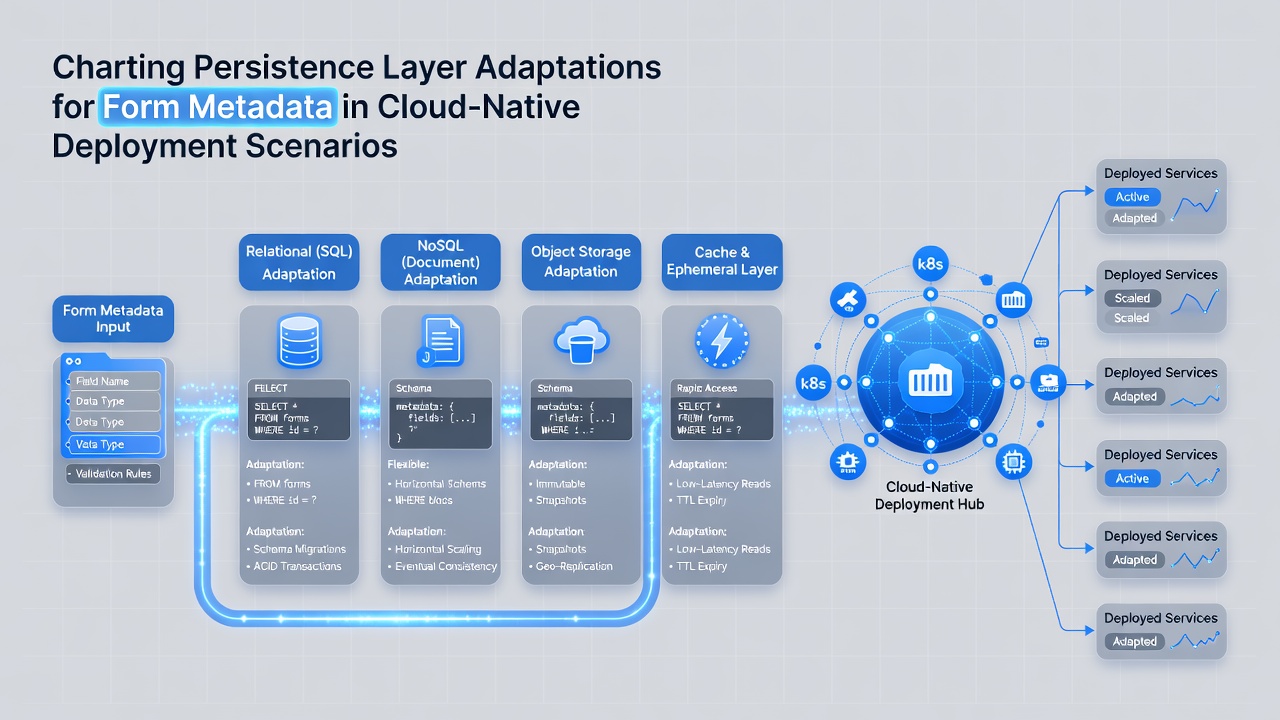
Those who have examined production systems report that query optimization becomes essential once metadata volumes grow beyond single-node capacities, leading to sharded collections partitioned by tenant or form category. Integration with service meshes adds another layer where sidecar proxies cache frequently accessed metadata fragments locally, cutting round trips to central stores. Figures from industry reports reveal adoption rates climbing steadily as teams balance performance needs against operational complexity.
Integration Considerations Across Regions
Regulatory frameworks influence storage choices differently depending on location, with guidelines from the National Institute of Standards and Technology emphasizing encryption and access controls for metadata containing sensitive descriptors. National Institute of Standards and Technology publications outline recommended practices that align with similar directives issued by Australian government digital transformation offices. Teams often select persistence solutions certified against these standards to streamline compliance during cross-border deployments.
What's interesting is how container-native databases now embed replication logic directly into operators that manage form metadata lifecycles, automatically scaling replicas based on observed access patterns. Research indicates these operators reduce manual tuning compared with earlier manual configurations, though initial setup requires careful mapping of metadata relationships to avoid hotspots.
Monitoring and Maintenance Approaches
Continuous observation of persistence layer health relies on metrics exported from storage adapters, including read/write latencies specific to metadata operations and conflict resolution rates during concurrent updates. People who maintain these systems often combine centralized logging with distributed tracing to pinpoint bottlenecks when form schemas evolve rapidly. Backup strategies adapted for cloud-native contexts include incremental metadata dumps stored across multiple availability zones, ensuring recoverability even after regional outages.
Evidence suggests that incorporating chaos engineering tests helps validate resilience because injected failures reveal whether metadata remains accessible during partial network partitions. Such testing became more routine following platform enhancements released around October 2026 that improved observability hooks for storage operators.
Conclusion
Adaptations in persistence layers for form metadata continue evolving alongside cloud-native tooling, driven by requirements for scalability, consistency, and regulatory alignment. Organizations track these developments through ongoing analysis of production metrics and alignment with standards from bodies like the National Institute of Standards and Technology alongside international counterparts. The patterns described here represent documented approaches that support reliable form handling in distributed environments without prescribing any single path forward.